

Small and Marginal Farmers
Can explore applicable agriculture and food-processing support for value addition and post-harvest processing.
Looking for a solar dryer subsidy in India? Government financial support may be available when a solar dryer forms part of an eligible food-processing, agricultural value-addition or rural livelihood project. The applicable assistance depends on the applicant, project type, location, eligible project cost and government scheme.
The Pradhan Mantri Formalisation of Micro Food Processing Enterprises (PMFME) Scheme is one of the main schemes to consider for eligible food-processing projects. Under PMFME provisions applicable in 2026, eligible units can receive a credit-linked capital subsidy of 35% of eligible project cost, up to ₹10 lakh per unit, subject to the scheme's eligibility and implementation conditions. A solar dryer is not automatically eligible for this subsidy simply because it uses solar energy. It must form part of an eligible project and meet the applicable requirements.
Solar dryers can be used by farmers, FPOs, SHGs and food-processing enterprises for products such as fruits, vegetables, spices, herbs and other suitable agricultural produce. MNRE currently identifies solar dryers as decentralised renewable-energy applications that can support livelihoods


The PMFME Scheme provides 35% credit-linked capital subsidy on eligible project cost, up to ₹10 lakh per unit, for eligible individuals, proprietorships, partnerships, FPOs, NGOs, cooperatives, SHGs and private limited companies setting up or upgrading eligible micro food-processing units.
When a solar dryer forms part of an eligible food-processing or value-addition project, applicants can check whether the equipment and related project costs qualify under the applicable PMFME provisions.
For the applicable individual-unit provision, the beneficiary contribution must beat least 10% of the project cost, with the balance financed through a bank loan, subject to approval and scheme conditions.
The 35% figure should therefore be understood as a subsidy on eligible project cost, not as a flat 35% discount on every solar dryer.

State Rural Livelihood Missions can support SHGs, FPOs and rural enterprises through different livelihood and food-processing programmes. The type and amount of assistance varies between states and individual programmes.
There is no single 30% or 40% SRLM subsidy that applies to solar dryers across India. Applicants should check the current notification and eligibility conditions of their State Rural Livelihood Mission.
MNRE has documented an example from Assam where a woman food-processing entrepreneur in Dibrugarh obtained a solar dryer through the Assam State Rural Livelihoods Mission (ASRLM) in December 2019. This demonstrates the use of solar dryers through a livelihood programme, but it does not establish a fixed SRLM subsidy percentage for all states.
State-level support should be checked separately from PMFME. The availability of assistance can depend on the state department, applicant category, type of food-processing activity and current programme.
Rather than applying one subsidy percentage to every state, applicants should verify the latest notification from the relevant agriculture, food-processing, rural livelihood or renewable-energy department.
Maharashtra
The state continues to support solar energy adoption including agricultural solar infrastructure. Renewable energy incentives and allied programs help reduce costs for solar processing systems in rural areas.
Karnataka
Karnataka offers support of around 30% under SRLM-linked rural livelihood and renewable energy assistance programs. These incentives help SHGs, NGOs, and farmer groups adopt solar dryers alongside other clean energy equipment.
Odisha
Odisha keeps up about 30% support through initiatives such as Mission Shakti and Odisha Livelihood Mission in favor of using solar drying systems as means of improving rural businesses.
Uttar Pradesh
Up to 20% assistance is available through livelihood and NGO project support under state rural development schemes. Renewable subsidies strengthen agricultural processing infrastructure.
North East States
States in the Northeast continue to provide around 30% incentives on hybrid and solar-based drying solutions under regional renewable energy missions.
Gujarat
Gujarat continues to offer special 10% support under select livelihood and SHG/NGO focused initiatives that can act as a top-up to central subsidy benefits.
Tamil Nadu
Solar drying units receive 40–50% subsidy (up to ₹3.5 lakh per unit to small and marginal farmers) under the Sub-Mission on Agricultural Mechanization, and SC/ST groups are further supported by the state.
Raheja Solar Food Processing (RSFP) supports farmers, food processors, SHGs and FPOs in exploring applicable government subsidy schemes for solar dryer projects. Depending on the applicant, location and project requirements, schemes such as PMFME, State Rural Livelihood Mission (SRLM) programmes and other state-level agriculture or food-processing schemes may be applicable.
RSFP can support customers with the relevant solar dryer specifications, quotations and project information required for subsidy planning and application. The applicable scheme, eligibility, subsidy amount and approval remain subject to the current guidelines and decision of the concerned government authority.
For an eligible PMFME project, the current subsidy provision is 35% of eligible project cost, subject to a maximum of ₹10 lakh per unit.
| Eligible Project Cost | 35% Calculation | Subsidy Before Maximum Limit |
|---|---|---|
| ₹5 lakh | ₹5 lakh × 35% | ₹1.75 lakh |
| ₹10 lakh | ₹10 lakh × 35% | ₹3.50 lakh |
| ₹20 lakh | ₹20 lakh × 35% | ₹7 lakh |
| ₹30 lakh | ₹30 lakh × 35% | ₹10.50 lakh |
For an individual unit, the applicable maximum is ₹10 lakh, so a project with an eligible cost of ₹30 lakh would not receive ₹10.50 lakh under this provision. The subsidy would be subject to the ₹10 lakh ceiling and all other scheme requirements.
The calculation should be based on the eligible project cost approved under the scheme, not simply the selling price of the solar dryer.
The application process depends on the scheme and state. For a PMFME-linked food-processing project, applicants generally need to establish the project, prepare the required documents and complete the applicable financing and approval process.

Check eligibility on schemes such as the PMFME Scheme, State Rural Livelihood Mission, or state renewable energy missions. Small entrepreneurs, SHGs, NGOs, and farmers FPOs normally qualify.

Select a solar dryer based on your crop and capacity needs. Approved manufacturers such as Rudra Solar Energy help you choose a model that meets scheme rules.

Keep basic documents ready including identity proof, bank details, land or unit details, and the product quotation.

Submit your application either to the concerned office of the agriculture department (District Industries Centre / SRLM) or through online portals.

Approval will be granted after scrutiny of the application and site verification if necessary.

Installation of the solar dryer takes place post-approval at your premises.

Once installation is verified, the subsidy amount is released directly or adjusted through the loan.
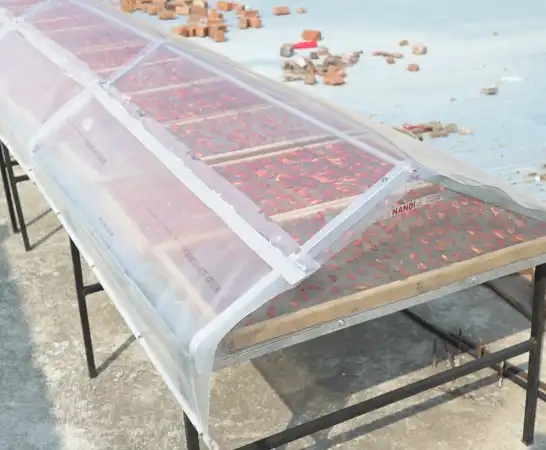
Hygienic drying of fruits, vegetables, spices, herbs, fish, flowers, and grains
Reduces post-harvest losses and spoilage
Retains natural color, taste, and nutrients
Increases shelf life and storage options
Lowers energy costs with solar power
Improves income and market opportunities for farmers and SHGs
MNRE has documented a solar dryer livelihood project in Uttarakhand involving a cooperative of approximately 200 farmers, most of whom were women. The cooperative used the dryer for products including rosemary, lemongrass, turmeric, parsley and other crops.
Eligibility depends on the specific government scheme.
Can explore applicable agriculture and food-processing support for value addition and post-harvest processing.
Can explore individual or common-infrastructure support depending on the project structure and applicable scheme.
Can explore PMFME and State Rural Livelihood Mission support for eligible food-processing activities.

Eligible micro food-processing enterprises can explore PMFME credit-linked subsidy provisions.
May qualify under specific PMFME components where the project and applicant meet the scheme requirements.
Partnerships and private limited companies are among the categories listed under the applicable PMFME credit-linked subsidy provision.
PMFME also provides seed capital of ₹40,000 per SHG member, subject to a maximum of ₹4 lakh per SHG, for working capital and purchase of small tools under the scheme's SHG support provision.
This seed capital provision is different from the 35% credit-linked capital subsidy for eligible units and should not be presented as a solar dryer subsidy.
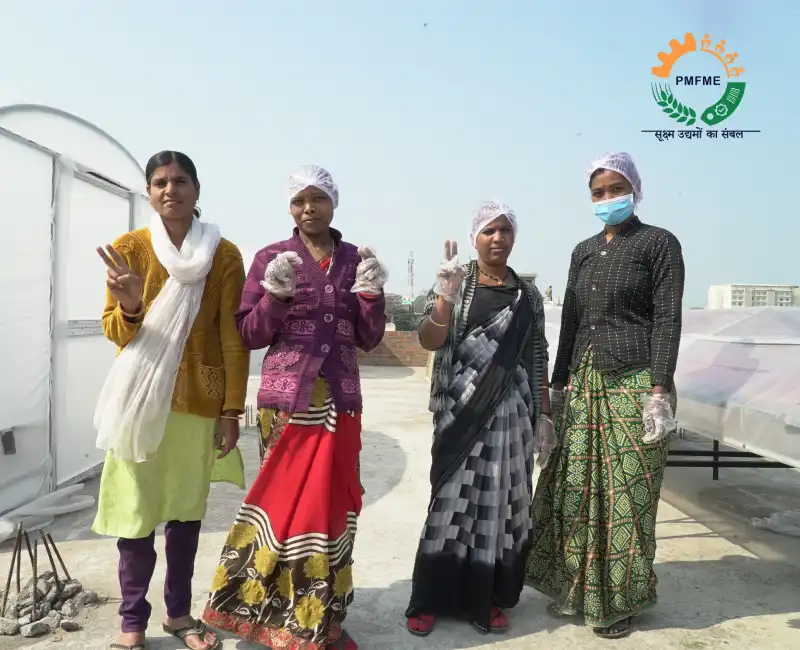
Applicants can also explore financing options alongside applicable subsidy programmes.
Bank finance: PMFME's credit-linked subsidy structure involves bank financing for the eligible project, subject to approval.
Agriculture Infrastructure Fund: Eligible agricultural infrastructure projects can separately check whether AIF financing provisions apply.
State government programmes: Agriculture, food-processing and rural livelihood departments may have additional support for eligible activities.
SHG and FPO financing: Groups can explore financing arrangements available through their respective livelihood and financial programmes.
Different schemes have separate eligibility requirements, so one form of financial support should not automatically be treated as a guaranteed additional subsidy.
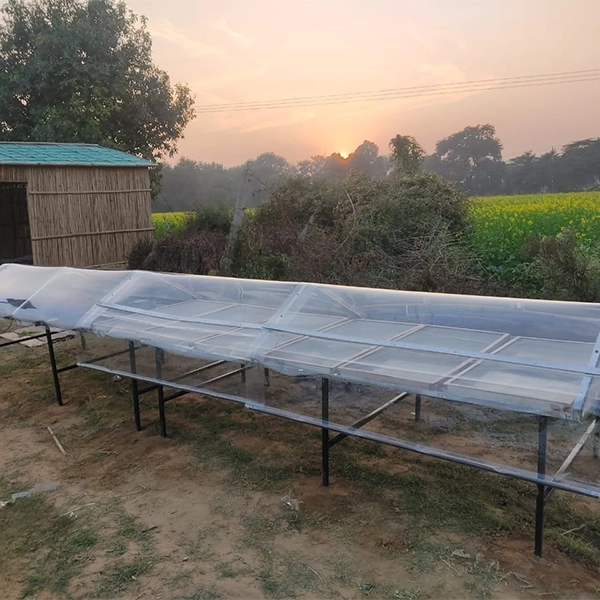
Choosing a drying system depends on energy availability, product requirements, operating costs and the scale of processing. Solar dryers can reduce dependence on purchased electricity or fuel, while electric, diesel and other fuel-based dryers provide different operating and temperature-control options.
| Feature | RSFP Solar Dryer | Electric Dryers | Diesel Dryers | Fuel-Based Dryers |
|---|---|---|---|---|
| Energy Source | Solar energy, with minimal dependence on grid electricity | Electricity | Diesel fuel | Biomass or other fuels |
| Type of Dryer | Cabinet, tunnel and hybrid solar dryer options | Cabinet, tunnel and hot-air dryers | Cabinet, tunnel and hot-air dryers | Cabinet, tunnel and tray dryers |
| Drying Process | Uses solar heat with controlled drying conditions depending on the model | Uses electrically generated heat | Uses heat generated from diesel fuel | Uses heat generated from biomass or other fuels |
| Product Quality | Designed for controlled and uniform drying when operated under suitable conditions | Temperature can be controlled according to the dryer | Temperature depends on the system and operating conditions | Drying performance depends on fuel type and system design |
| Environmental Impact | Uses renewable solar energy and can reduce dependence on fossil fuels | Depends on the source of electricity | Higher dependence on fossil fuels | Depends on the fuel used |
| Subsidy Support | May qualify under applicable food-processing, livelihood or state schemes, subject to eligibility | Depends on the applicable scheme | Depends on the applicable scheme | Depends on the applicable scheme |
| Operational Cost | Low running cost after installation, with maintenance requirements | Electricity costs vary with usage | Fuel and maintenance costs | Fuel and maintenance costs vary by system |
Designed and Developed by Raheja Solar Food Processing
© 2026 by Raheja Solar Food Processing Pvt. Ltd.
All Rights Reserved


