
Raheja Solar Food Dehydrator Machine in West Bengal, India
West Bengal produces a wide range of fruits, vegetables, and spices, including mangoes from Malda, pineapples, bananas, litchis, tomatoes, ginger, and turmeric. These seasonal crops create opportunities for farmers, FPOs, and food processors to convert fresh produce into dried ingredients, powders, and value-added food products. However, high humidity and monsoon rainfall can make open-sun drying less practical during certain periods, affecting post-harvest handling and processing schedules.
Raheja Solar Food Processing Pvt. Ltd. (RSFP) provides solar food dehydrator machines (সৌর খাদ্য শুকানোর যন্ত্র) for agricultural and food-processing businesses across West Bengal. Our Sahaj, Samagra, and Agraj models support different batch sizes and processing needs, helping users dry suitable local produce for storage, further processing, and value addition.
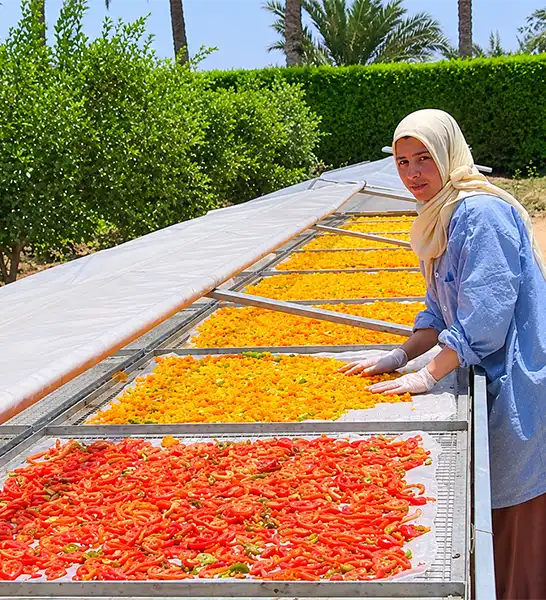
Why Solar Dryers Are Suitable for West Bengal's Climate
West Bengal's humid climate and extended monsoon season can create challenges for farmers and food processors who depend on traditional open-sun drying. Frequent rainfall, cloudy skies, and moisture in the air can interrupt drying schedules and make it difficult to achieve consistent results. During sunny periods, solar dryers use available solar energy to process suitable fruits, vegetables, and spices in an enclosed drying chamber.
Solar dryers from RSFP offer different processing capacities to meet the needs of farmers, FPOs, and food-processing businesses across West Bengal. Their suitability depends on local weather conditions, crop characteristics, and the required drying parameters.
- Supports enclosed drying in West Bengal's humid climate.
- Reduces dependence on outdoor drying during rainfall.
- Uses solar energy to dry produce during sunny periods.
- Protects produce from dust, insects, and contaminants.
- Processes seasonal fruits, vegetables, and spices.
Why Choose RSFP Solar Dehydrated Machine in India?
RSFP solar dryers are built not just for drying, but for practical use in real farming conditions.

Hygienic & Safe Drying
The enclosed setup keeps the produce protected from dust, insects, and outside contamination. It helps maintain cleaner drying compared to open sun drying.

Superior Product Quality
Retains natural colour, taste, and nutrients of the produce. Helps farmers achieve higher market value for dried products.

Faster & Uniform Drying
Airflow is distributed evenly inside the unit, so drying happens in a steady way. This reduces uneven patches and helps complete the process in less time.

Affordable & Low Maintenance
Simple to use and doesn’t need frequent servicing. Suitable for farmers and groups who want a practical setup without extra running cost or effort.

Climate-Resilient Performance
Works across changing weather conditions, including humidity and seasonal variations. Drying is not fully dependent on open weather conditions.

Energy-Efficient & Eco-Friendly
Runs completely on solar energy without electricity or fuel. This helps reduce operating costs while keeping the process sustainable.
Solar Drying Machines for Agri Products in West Bengal
A fixed solar dryer for large volume agricultural processing and commercial operations with higher batch capacity.

A flexible, medium size solar dryer for farmers, self-help groups, small industries, and medium batch food processing.

A compact and portable solar dryer for domestic growers and small batch food processing.

Crops and Produce Suitable for Solar Drying in West Bengal
West Bengal produces a wide variety of fruits, vegetables, spices, and other agricultural products that offer opportunities for solar drying and food processing.
Fruits
Selected fruits grown across West Bengal can be processed into dried products using suitable preparation and drying conditions.

Mango (আম)

banana (কলা)

pineapple (আনারস)

litchi (লিচু)

guava (পেয়ারু)

papaya (পেঁপেু)
Vegetables
Selected vegetables can be dried for food processing and storage, depending on their moisture content and intended end use.

Potato (আলু)

tomato (টমেটো)

brinjal (বেগুন)
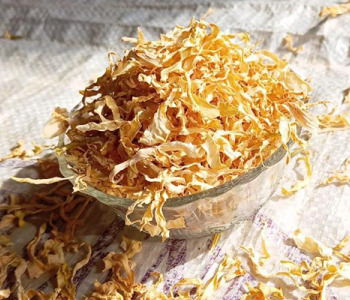
cabbage (বাঁধাকপি)
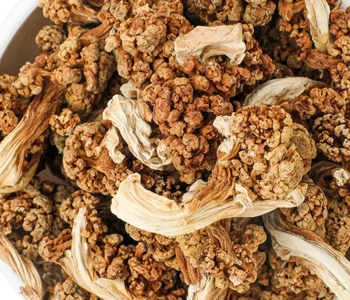
cauliflower (ফুলকপি)

okra (ঢেঁড়স)
Spices & Herbs
West Bengal's spice crops offer opportunities to produce dried ingredients and powders for further food processing.

Ginger (আদা)

turmeric (হলুদ)

garlic (রসুন)

red chilli (লঙ্কা)

coriander (ধনে)
Other Agricultural Products
Selected flowers, leaves, and other suitable plant materials can also be considered for drying based on their processing requirements.

Marigold (গাঁদা)

rose (গোলাপ)

tuberose (রজনীগন্ধা)

betel leaves (পান পাতা)
Solar Dryer vs Traditional Drying in West Bengal
West Bengal's humid climate, frequent monsoon rainfall, and cloudy weather can make traditional open-sun drying difficult, particularly during the rainy season. Raheja solar dryers provide an enclosed drying environment for suitable local produce, including mangoes, bananas, pineapples, tomatoes, ginger, turmeric, and other vegetables. By using available solar energy during sunny periods, these dryers help reduce direct exposure to outdoor dust and insects while supporting the processing of seasonal agricultural produce.
| Feature | Open Sun Drying (Traditional Method) | RSFP Solar Dryer (Modern Solution) |
|---|---|---|
| Hygiene | Exposed to dust, insects, and animals | ✓ Clean, enclosed drying system |
| Drying Time | Dependent on weather conditions, often delayed during monsoon | ✓ Faster and consistent drying throughout the year |
| Product Quality | Uneven drying, affecting colour and texture | ✓ Uniform drying with better quality retention |
| Market Value | Lower due to inconsistent quality | ✓ Higher due to premium-grade output |
| Food Waste | High, especially during peak harvest and rainy seasons | ✓ Significantly reduced with controlled drying |
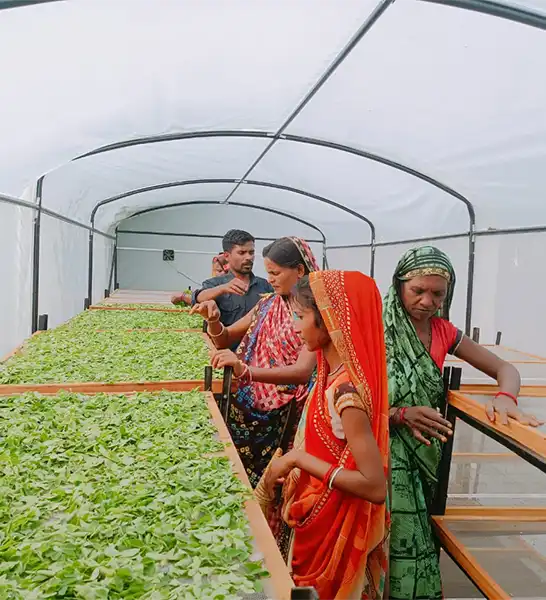
Supporting Farmers and Rural Food Enterprises in West Bengal
West Bengal's diverse agricultural production creates opportunities for farmers and rural enterprises to process seasonal fruits, vegetables, and spices through solar drying. Farmers, FPOs, SHGs, cooperatives, rural entrepreneurs, and small food businesses can consider processing products such as mangoes, bananas, pineapples, tomatoes, ginger, turmeric, and red chilli for further use and value addition.
- Support the processing of seasonal crops beyond fresh produce sales.
- Develop value-added products such as dried fruits, vegetables, and spices.
- Select dryer capacity based on crop type, batch size, and processing needs.
- Create opportunities for rural food processing and local enterprise growth.
RSFP's Sahaj, Samagra, and Agraj solar dryers serve different processing requirements, from small batches to larger commercial operations. Farmers and food businesses across West Bengal.
Post-Harvest Challenges in West Bengal with RSFP Dryers
| Farmer Pain Point | Real Impact on Farmers | How RSFP Solar Dryers Solve It |
|---|---|---|
| Produce spoils quickly after harvest | Loss of income due to unsellable or wasted crops | Rapid and uniform drying reduces moisture and prevents spoilage |
| Unexpected rains during drying | Entire batches get damaged or rot | Enclosed drying protects produce from rain and humidity |
| Drying on roads or open fields | Contamination from dust, animals, and vehicles | Hygienic, enclosed chambers ensure clean processing |
| Uneven drying results | Poor quality leads to lower market prices | Controlled airflow and temperature ensure consistent quality |
| No proper storage after harvest | Farmers forced to sell immediately at low prices | Extended shelf life allows delayed selling at better rates |
| Lack of value addition options | Missed opportunity for higher profits | Enables production of dried fruits, spices, and herbs |
| High dependency on middlemen | Reduced bargaining power and income | Better quality products open access to premium markets |
Government Subsidies for Solar Dehydrators in West Bengal
West Bengal Food Processing Incentive Scheme (WBFPIS)
The West Bengal Food Processing Incentive Scheme (WBFPIS) promotes the establishment, expansion, and modernization of micro food-processing units across the state. It offers eligible enterprises a credit-linked capital subsidy of 40% on plant and machinery costs, up to ₹10 lakh, supporting activities such as fruit, vegetable, and spice processing.
Mission for Integrated Development of Horticulture (MIDH)
The 2025 MIDH guidelines include solar crop dryers with 24-hour backup. The cost norm is ₹2.5 lakh for a 70 kg unit and ₹3.5 lakh for a 100 kg unit, with assistance at 40% in general areas. Applicants in West Bengal should confirm the current state action plan, technical specifications, and equipment eligibility with the Horticulture Department.

PMFME Scheme
PMFME provides eligible individual micro food-processing units with a credit-linked capital subsidy of 35% of eligible project cost, up to ₹10 lakh. The beneficiary must contribute at least 10%, with the balance financed by a bank. A dryer may form part of an approved processing project, subject to scheme rules and application availability.

Agriculture Infrastructure Fund (AIF)
AIF offers financing support for eligible post-harvest infrastructure projects, including applicable processing facilities. Eligible borrowers may receive 3% annual interest subvention on loans up to ₹2 crore, subject to scheme conditions. Applicants should confirm project eligibility and lending requirements before applying.

Improving Preservation of Agricultural Produce in West Bengal
Farmers and food-processing businesses in West Bengal can use RSFP solar dryers to process seasonal produce such as mangoes, bananas, pineapples, litchis, tomatoes, ginger, and turmeric. Drying suitable crops under controlled conditions can support post-harvest preservation, reduce dependence on open-sun drying, and create opportunities to develop dried ingredients for storage and further food processing.
Find an Affordable Solar Dryer Machine in West Bengal
Looking for a solar dryer machine for your business in West Bengal? Share your crop type, batch quantity, processing needs, and installation space. RSFP can help you select a suitable model and understand applicable subsidy options.
- Get guidance on the right dryer model
- Understand cost and capacity requirements
- Explore available subsidy options


Solar Dryer Services Across West Bengal's Districts
Our Sahaj, Samagra, and Agraj models support different drying capacities and processing requirements across the state's agricultural regions.
- Alipurduar (আলিপুরদুয়ার)
- Cooch Behar (কোচবিহার)
- Darjeeling (দার্জিলিং)
- Jalpaiguri (জলপাইগুড়ি)
- Kalimpong (কালিম্পং)
- Dakshin Dinajpur (দক্ষিণ দিনাজপুর)र)
- Malda (মালদা)
- Murshidabad (মুর্শিদাবাদ)
- Uttar Dinajpur (উত্তর দিনাজপুর)
- Birbhum (বীরভূম)
- Hooghly (হুগলি)
- Paschim Bardhaman (পশ্চিম বর্ধমান)
- Purba Bardhaman (পূর্ব বর্ধমান)
- Howrah (হাওড়া)
- Kolkata (কলকাতা)
- Nadia (নদিয়া)
- North 24 Parganas (উত্তর ২৪ পরগনা)
- South 24 Parganas (দক্ষিণ ২৪ পরগনা)
- Bankura (বাঁকুড়া)
- Jhargram (ঝাড়গ্রাম)र)
- Paschim Medinipur (পশ্চিম মেদিনীপুর)
- Purba Medinipur (পূর্ব মেদিনীপুর)
- Purba Medinipur (পূর্ব মেদিনীপুর)
Common Questions About Solar Dryers in West Bengal
For drying fruits and vegetables in West Bengal, the required temperature depends on the crop, slice thickness, and desired final moisture. RSFP solar dryers operate at a maximum temperature of 60 ± 10°C, depending on the model.
Yes, during suitable sunny periods between rainfall, solar dryers can process ginger, turmeric, and red chilli. Prolonged cloudy weather and high humidity may slow drying and affect schedules.
Installation space depends on the RSFP model, Sahaj and Samagra are portable, foldable models suited to flexible installation spaces. Agraj is designed for fixed installation, so it requires a dedicated area of approximately 8 × 24 sq. ft., with a drying area of 360 sq. ft.
Yes. In West Bengal's humid and rainy seasons, open-sun drying can expose produce to outdoor dust, insects, and rainfall. RSFP's enclosed solar drying chambers help limit this exposure while processing suitable crops such as Malda mangoes, bananas, tomatoes, ginger, and turmeric.
RSFP solar dryers use forced convection in applicable models to circulate air through the drying chamber. Proper tray loading, product preparation, and airflow help support consistent drying.
Solar dryers can process suitable crops during sunny breaks in the rainy season. However, persistent rainfall, cloud cover, and high humidity can reduce drying performance and extend processing time.
FPOs may explore eligible support through schemes such as MIDH and other food-processing programmes. Assistance depends on project eligibility, approved equipment, funding availability, and current guidelines.
Yes. West Bengal's WBFPIS offers eligible food-processing units a capital subsidy of up to 40%, capped at ₹10 lakh. Farmers and food businesses can also check central schemes such as MIDH and PMFME for financial assistance, subject to eligibility and current guidelines.
Yes. RSFP solar dryers distribute hot air evenly within the drying chamber, helping businesses in West Bengal achieve uniform drying while retaining the natural flavour, colour, and nutritional value of processed produce.
Yes. RSFP solar dryers use UV-stabilized polycarbonate sheets to filter harmful UV radiation while allowing solar heat into the drying chamber, supporting protected food processing in West Bengal.
